
The result of a journey that began years ago and has grown through experiences, encounters,…

Relocate Artisan: from Roots to the Future
Contrary to popular belief, the craft of the artisan does not belong to the past. It is a language capable of interpreting the present, a heritage that calls to be transmitted and renewed. Hands that weave fibers, shape clay, or engrave metals are now required to engage with technology, design, and sustainability, reclaiming a central role in the contemporary world.
According to Fortune Business Insights, the global craft market surpassed $1.1 trillion in 2024, with steady growth reflecting the increasing demand for handmade products, particularly among younger consumers. It is not just an aesthetic matter: it is the search for authenticity, stories connected to territories, and goods with human as well as economic value.


Youth and Tradition: The Generational Transition
In this context, generational transition becomes decisive. The Ballard Brief estimates that there are between 125 and 300 million artisans worldwide, with a significant portion over fifty years old. Without the involvement of younger generations, many skills risk disappearing. Yet, they are increasingly showing interest: from workshops experimenting with 3D printing and sustainable materials to digital platforms enabling access to global markets, craftsmanship proves fertile ground for those seeking a creative profession with tangible impact.
Rethinking craftsmanship today means restoring its social dignity, making it visible, and turning it into a desirable career choice. Not as nostalgia for a lost era, but as a forward-looking project: a future built by intertwining tradition and innovation, memory and vision. No technology can replace the value of a handcrafted object, only enhance its symbolic and cultural significance.


Creative Italy and the Training of the Future
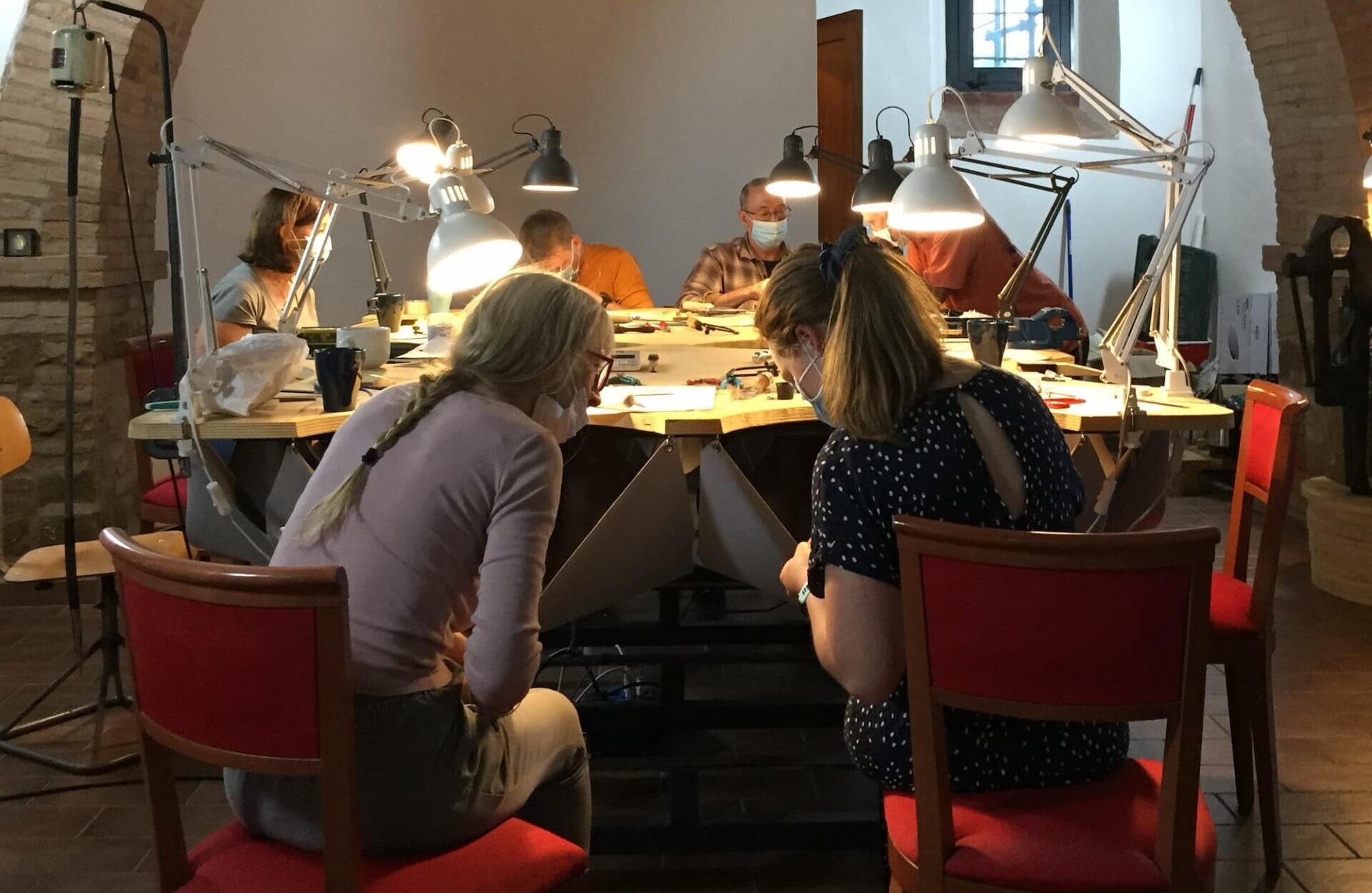
Bringing this process to life is Creative Italy, which through its professional courses is creating a training model that combines tradition and innovation. The programs, developed together with qualified master artisans across various sectors, aim to train new skilled professionals. The goal is clear: to transmit solid skills, updated techniques, and cultural knowledge that enable young people to pursue a tangible career path.
In this way, Creative Italy not only preserves craft heritage that might otherwise be lost but also gives the sector a contemporary dimension, offering young people a real professional opportunity. It is a crucial step in relaunching craftsmanship not as a memory of the past, but as a choice for the future.
To discover all professional courses and start building your path in contemporary craftsmanship, visit the Creative Italy Schools page.
Related Posts
Comments (0)