
The result of a journey that began years ago and has grown through experiences, encounters,…
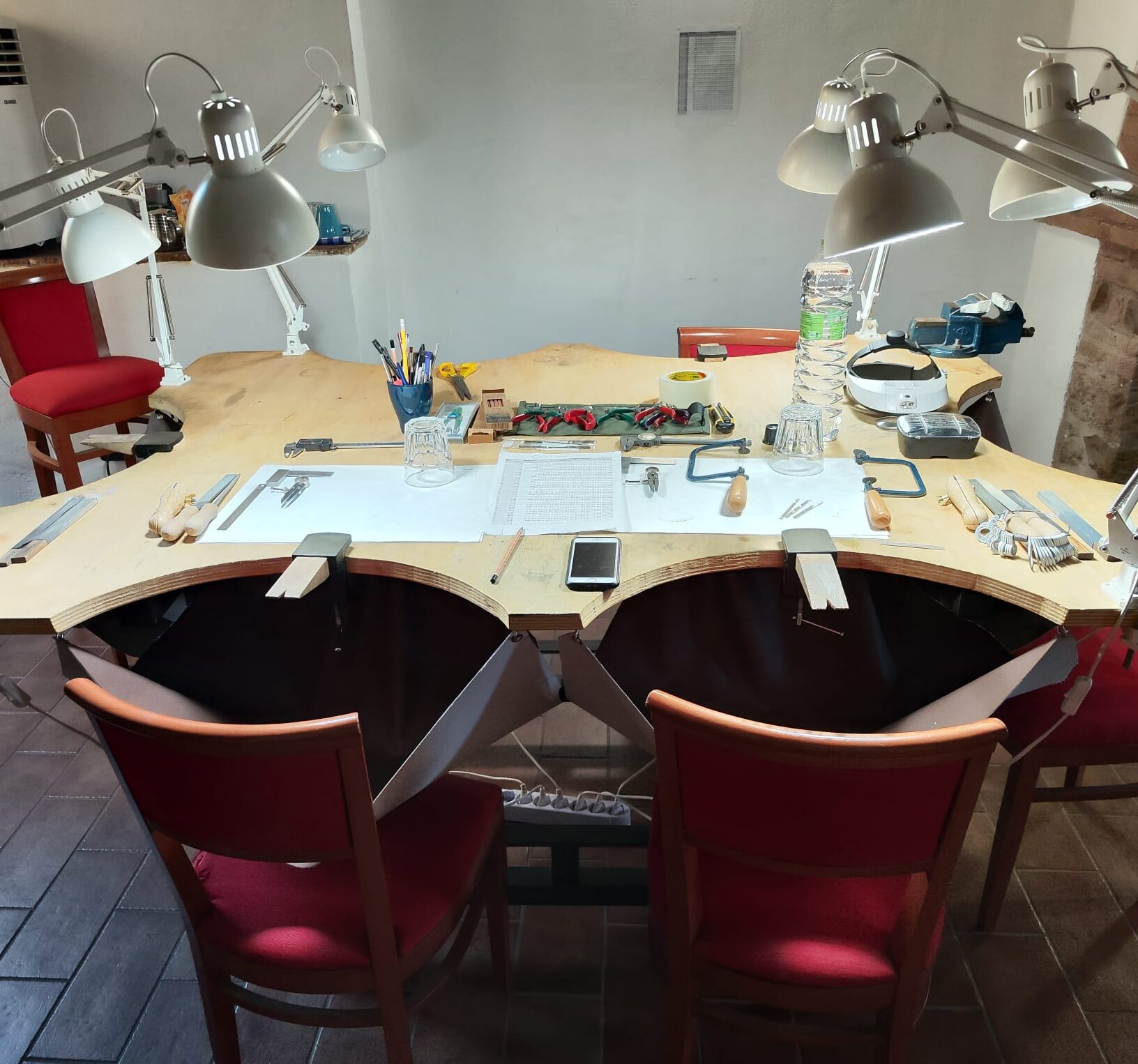
From the Desk to the Workshop: how to build a solid craft career without illusions
- federica
- news
- 0 Comments
This article is for those who are looking at craftsmanship as a transitional path, trying to turn an existential urgency into a sustainable career. But be careful: this requires much more than “creative passion.”
There is, in fact, a side of craftsmanship that is rarely told. It is not the visible one, made of finished objects or carefully curated images, but the deeper one: the time, technique, discipline, and structure that lie behind the craft. It is the hidden layer that determines whether a life project remains a passion or becomes a real profession.
The Initial Misconception
The desire to change life often comes from a growing dissatisfaction with how time is spent—for example, in an office job that works, but no longer feels fulfilling. In this context, craftsmanship appears as a way back to something more concrete. This is where the first misunderstanding arises: believing it is an immediate form of expression with immediate results.
In reality, craftsmanship is not a shortcut toward independence, and the myth of talent quickly collides with reality: taste and intuition are not enough when working with materials that require control, repetition, and precision.
 The “200-Hour Rule”: The Boundary Between Hobby and Profession
Why do we talk about 200 hours? This is not a symbolic number, but a fundamental pedagogical threshold in high-level craftsmanship. If it may take only twenty hours to learn the basics of a new activity, turning a gesture into a marketable skill requires a much deeper investment.
This time span represents the “threshold of gesture memory”:
- From execution to control: in the early hours of practice, the mind is focused on how to hold and use the tools. Around the 200-hour mark of guided practice, the gesture becomes automatic. This is when the artisan stops struggling with the tool and begins to engage in a dialogue with the material.
- The professional standard: in vocational training schools, 200 hours of intensive learning (about 1–2 months of focused work) represent the minimum requirement to move from “enthusiast” to “competent practitioner.” It is the baseline needed to enter the market with a product that meets Made in Italy standards.
Crossing this threshold means acquiring not only technique, but a professional posture. It is the moment when a project stops being an experiment and gains the dignity of a craft.

The Creative Italy Method: Guiding Your Evolution
One does not improvise as an artisan; one becomes a master through a path that develops personal aptitudes and transforms them into marketable skills. Creative Italy was created to be the catalyst of this transformation, offering a structured framework for those who decide to seriously invest in their future.
Here is how our Professional Schools turn aspiration into reality:
- Workshop Immersion: the core of our offer is direct contact with master artisans. You will enter historic workshops where know-how is transmitted through daily practice. This is where technical gesture is refined and theory becomes material.
- Advanced Specialisation Paths: the programs available on our platform are designed for those seeking intensive training that goes beyond the 200-hour threshold. Each path aims to give you full autonomy in working with materials—from ceramics to goldsmithing, from leather to restoration—following the highest standards of Made in Italy.
- Entrepreneurial Vision and Brand Identity: knowing how to create is essential, but knowing how to position your work is what makes a career sustainable. We integrate technical training with tools for the contemporary market: pricing, storytelling through Heritage Marketing, and sales management.
- Your Background is an Asset: those coming from corporate environments already have valuable organisational skills. Creative Italy helps integrate artisanal technique with this solid foundation, creating a profile of the “Contemporary Artisan,” capable of managing both the workbench and their own business.

Unlock Your Potential
While technique requires time and discipline, the success of this transition also relies on qualities you likely already possess. Never underestimate persistence, creativity, passion, and curiosity: these are the most valuable tools you bring into this new professional world.
Contemporary craftsmanship is an ongoing intellectual challenge. Your curiosity allows you to innovate centuries-old traditions; your determination supports you when materials resist; your passion becomes the signature that clients recognize in every piece you create.
The journey from desk to workshop is an exciting one that requires method, but also celebrates your uniqueness. Creative Italy’s professional schools have been selected precisely for this: to welcome your determination and provide the foundations needed to transform it into a new, solid professional identity. And if you have read this far, it is time to stop imagining and start building your new career.
Do you know our Professional Schools?
Discover the path best suited to your professional growth – LINK SCHOOL
Related Posts
Team Building is becoming an increasingly common component of corporate programmes, but the meaning attributed…
When someone chooses to take part in a professional course, a creative retreat, or a…
Comments (0)