


The result of a journey that began years ago and has grown through experiences, encounters,…
World Made in Italy Day: How Creative Italy Trains the Masters of Tomorrow
Within the landscape of Italian productive identity, the World Made in Italy Day is not only a tribute to the past, but an opportunity to closely observe how this heritage continues to evolve. One of the most significant trends in recent years has been the growing international demand for skilled artisans. Made in Italy is no longer just a geographical label, but a globally recognized language—sought after and often imitated.
Celebrating Made in Italy today also means questioning its future. How do we preserve a tradition without making it static? How do we innovate without losing authenticity?
The answer likely lies in the active transmission of knowledge. Not by turning craftsmanship into something to be preserved in a museum, but by keeping it alive, accessible, and evolving. In this sense, contemporary education becomes a bridge between generations—a space where technique is renewed without losing its roots.
Leather goods and high craftsmanship
Among the sectors that best embody this excellence, leather goods remain a globally recognized pillar. It is not only about aesthetics, but about a complex system made of technique, materials, design, and a deep culture of detail. This is where training institutions such as Creative Italy play an increasingly strategic role: shaping new professionals able to meet the standards of high-end manufacturing.
Shoemaking: building excellence, step by step
In the bespoke shoemaking course, students follow an intensive path that covers the entire process of creating a handmade shoe—from foot measurement to the final product.
This is not about learning isolated techniques, but about working alongside expert artisans: studying lasts, shaping the wooden form, developing custom patterns, and learning how to select the most suitable materials for each component.
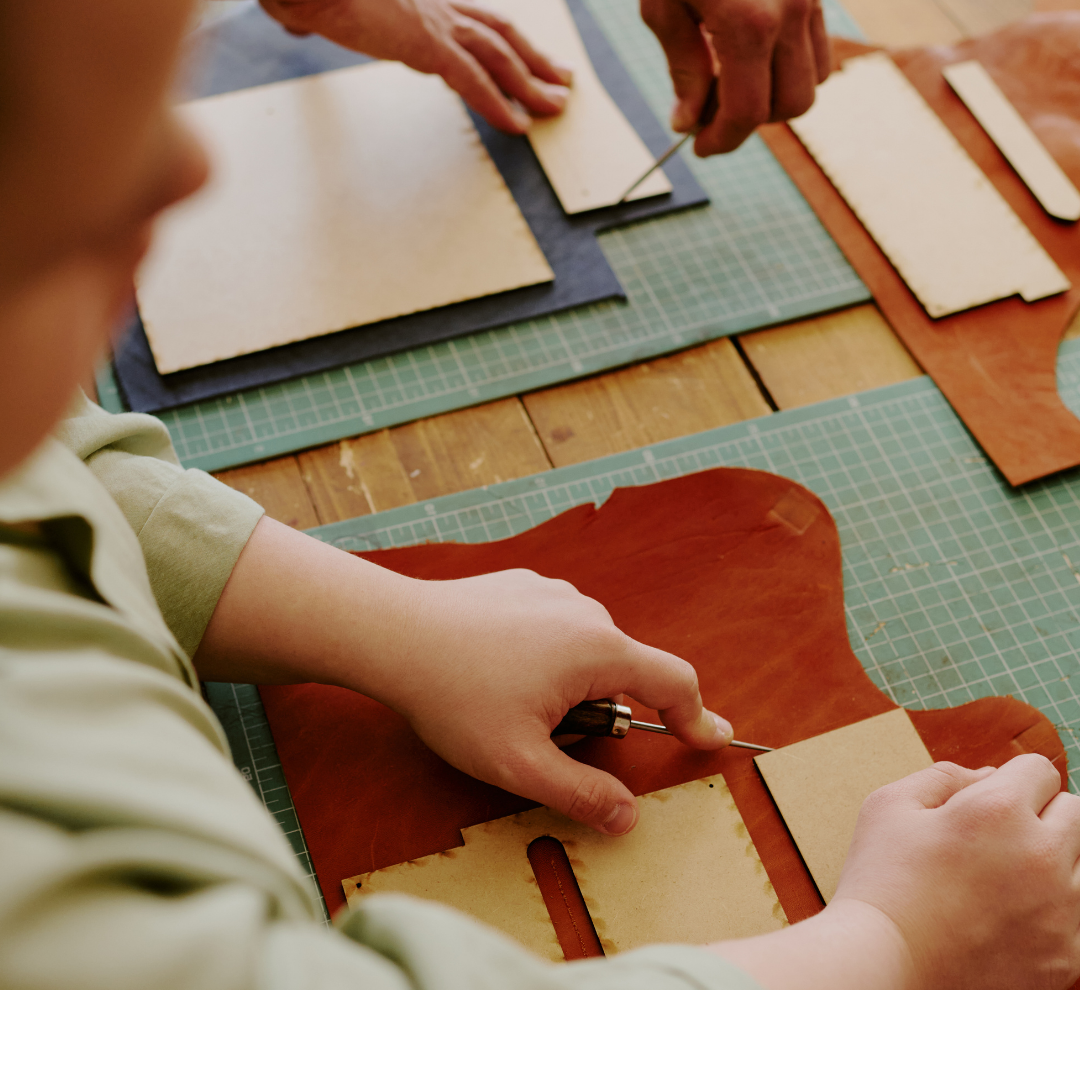
Special attention is given to traditional Italian constructions such as Goodyear welted and Norwegian stitching, which ensure durability, quality, and strong aesthetic identity. Every stage—from leather cutting to upper making, assembly, and finishing—requires absolute precision and attention to detail.
The final result is not just a pair of shoes, but a synthesis of skills: a bespoke product, entirely handmade, reflecting a personal vision and a professional level ready for the international market.
Bags and accessories: design, technique, and identity
Alongside footwear, the bag making course represents another key pillar of leather craftsmanship training. Structured across multiple levels, it guides students from understanding materials to the creation of a full collection.
The learning path begins with the basics: tools, leather, fabrics, and hardware, as well as small leather goods such as cardholders and cases. Gradually, students move on to more complex designs—bucket bags, saddle bags, and structured pieces with compartments, linings, and advanced closures.
What distinguishes this training is the integration of technique and design thinking. Students are not only taught how to build, but also how to design: developing a visual language, experimenting with volumes and finishes, and defining a recognizable identity.
The final project—a complete capsule collection—marks the transition from learning to entrepreneurial vision.
Training: the future of Made in Italy starts here
In both pathways, one central element emerges: professional practice. Students work in workshops alongside experienced artisans in an international environment that reflects the real dynamics of the industry.
Repetition, hands-on practice, and continuous feedback allow them to develop real-world skills aligned with high manufacturing standards. This training becomes a concrete preparation for entering the professional world: opening an atelier, collaborating with luxury brands, or developing an independent label.
World Made in Italy Day reminds us that excellence is not a guaranteed legacy, but a continuous process. Investing in education, valuing craftsmanship, and maintaining high standards is not only a cultural choice, but also an economic one. Because Made in Italy today is more than ever a global language of skill, identity, and vision. And the future of this language inevitably passes through the hands of those who are learning it today.
To follow projects, activities, and new opportunities in contemporary craftsmanship, you can subscribe to our newsletter and stay updated on upcoming initiatives. To learn more about the professional courses and active programs, visit the dedicated pages on the Creative Italy Professional Schools website and contact us for information and guidance.
Related Posts
Comments (0)