


When Taking a Break Isn't Enough There are times when even our free time doesn't…

The imperfection and the value of small mistakes
Many of the most extraordinary advances in the history of science, technology, and art have resulted from accidental mistakes. The invention of the famous Post-it, for example, was the outcome of a laboratory error in which an ineffective adhesive was transformed into a revolutionary office product. These “failures” not only changed the course of history but also demonstrate that mistakes are an integral part of the human creative process. It is precisely within imperfection that the possibility to explore new paths and discover something unexpected lies.
There is something deeply human about imperfection. Although we often associate the term “imperfection” with flaws or poor quality, its interpretation has evolved significantly. More than ever, imperfection is now celebrated as a distinctive trait of beauty. In an era where everything is standardized, mistakes—those details often considered flaws—become the true added value of every handcrafted creation.
Wabi Sabi: Imperfect is True
Imperfection is what gives soul to every piece, making it unique and special. Imagine a ceramic cup—its rim slightly uneven, an unexpected color variation; it is not perfect, yet this is precisely what makes it unique. This is not a new concept, as many cultures celebrate imperfection as an aesthetic value. The Japanese philosophy of Wabi Sabi, for example, embraces asymmetry, simplicity, and incompleteness, finding beauty in the marks left by time and use. It recognizes perfection as an ideal concept, while reality is made of imperfections.
This connection is often absent in mass-produced objects, where perfection is standardized and lacks personality. In contrast, imperfection is a sign of authenticity, a signature of human craftsmanship.
Italian Craftsmanship: An Example of Imperfect Beauty
Machines, in all their efficiency, follow rigid programs and processes that leave no room for the unexpected. On the other hand, human beings, with their ability to improvise and adapt, can turn a mistake into an opportunity, creating innovative solutions. In mechanical perfection, an error is merely a flaw; in craftsmanship, an error is a gateway to originality.
In Italy, craftsmanship has always been synonymous with tradition and innovation, and small imperfections in Italian handmade products are often considered marks of authenticity and mastery. This approach is reflected in every sector—from the blown glass of Murano to the hand-worked leather of Florence, from the fine fabrics of Neapolitan tailoring to the vibrant ceramics of Caltagirone. In these cases, imperfection is not just an aesthetic value but a true hallmark of quality.
Creative Italy: Celebrating Imperfection as a Value
Creative Italy values the importance of being true rather than perfect. This is the beauty of a process that does not aim for cold precision but for the authenticity of craftsmanship, which is felt through the stories of those who have met us, interviews with our artisans, and in-depth features dedicated to the creative and artisanal sector.
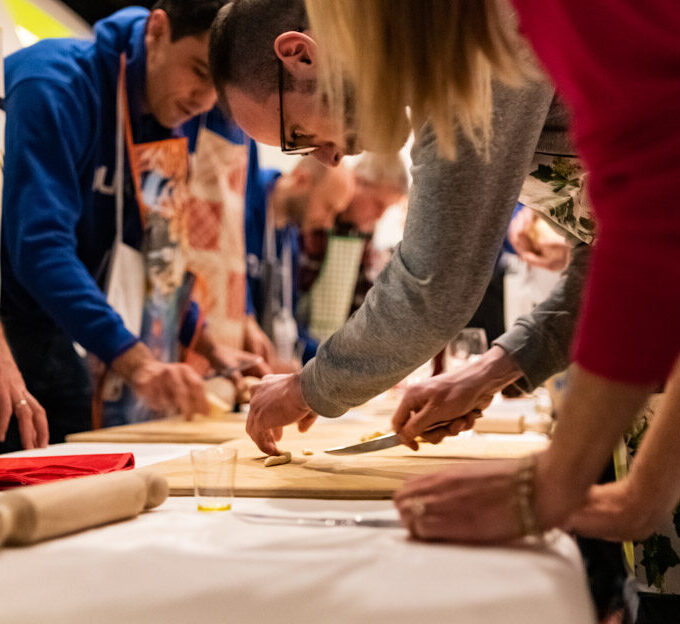
For this reason, Creative Italy’s courses are designed for those who want to learn without fear of making mistakes. Here, every mistake is an opportunity, every attempt is a step toward growth. We invite you to challenge yourselves, explore your abilities, and discover the beauty hidden within creative processes.
Creative Italy encourages you to make mistakes, to embrace imperfection, and to remember that every small error is a mark of humanity, creativity, and passion!
Related Posts

Comments (0)